College Academic

At Mount Kelly, we take immense pride in our pupils’ consistently outstanding public examination results. These achievements reflect our unwavering commitment to unlocking every student’s academic potential.

Our approach balances high expectations with precise progress tracking, personalised support, and thoughtfully designed enrichment opportunities. This ensures that every pupil—regardless of ability—thrives and often surpasses their own goals.

From Year 9 onward, the curriculum is crafted to challenge and inspire. We nurture critical thinking, encourage lively debate, and open doors to fresh ideas, all while building strong work habits that lay the groundwork for success at GCSE and beyond.

Independent learning is at the heart of our teaching philosophy, empowering pupils to take ownership of their education and develop the skills they’ll need for lifelong achievement.

GCSE

GCSE

In Year 9 our pupils study every subject giving them a broad base from which to make an informed decision about their GCSE options.

GCSE options are chosen during the Lent Term of Year 9 and the format is set out below with helpful advice at the end of the subject lists.

The core GCSE curriculum

All pupils study the core subjects:

  • English (Language and Literature)
  • Mathematics
  • Sciences (Physics, Chemistry and Biology are studied separately by all pupils up to the end of Year 11)

GCSE Options

Pupils can choose four subjects from this list:

  • Art and Design: Fine Art
  • Business Studies
  • Computer Science
  • Design Technology
  • Drama
  • English as an Additional Language (EAL)
  • French
  • Geography
  • History
  • Music
  • Personalised Learning
  • Philosophy, Religion & Ethics (PRE)
  • Physical Education
  • Spanish

​​​​​Further Information

Only pupils whose first language is not English will be permitted to study English as an Additional Language. These pupils are not required to study any other Modern Foreign Language option.

Pupils are strongly advised to pick one of the humanities for one of their options. (Geography, History or Religious Studies) Pupils are also encouraged to choose a creative subject. (Art, Design Technology or Drama).

The College reserves the right to withdraw any course for which there is insufficient demand.

GCSE Grading

GCSE grades are given as 9-1 with 9 being the highest possible attainment grade.

Tiering (Higher & Foundation Papers) is only available in some subjects.

Pupils may be given the option to take the Combined Science GCSE should this be a better option for them.

All GCSEs are fully linear where assessment will occur at the end of the course. Subject content is not divided into modules and there is no Controlled Assessment module.

Examinations are the default method of assessment.

Examinations for GCSE are only available in the Summer Term.

Art

Art

GCSE Art and Design: Fine Art


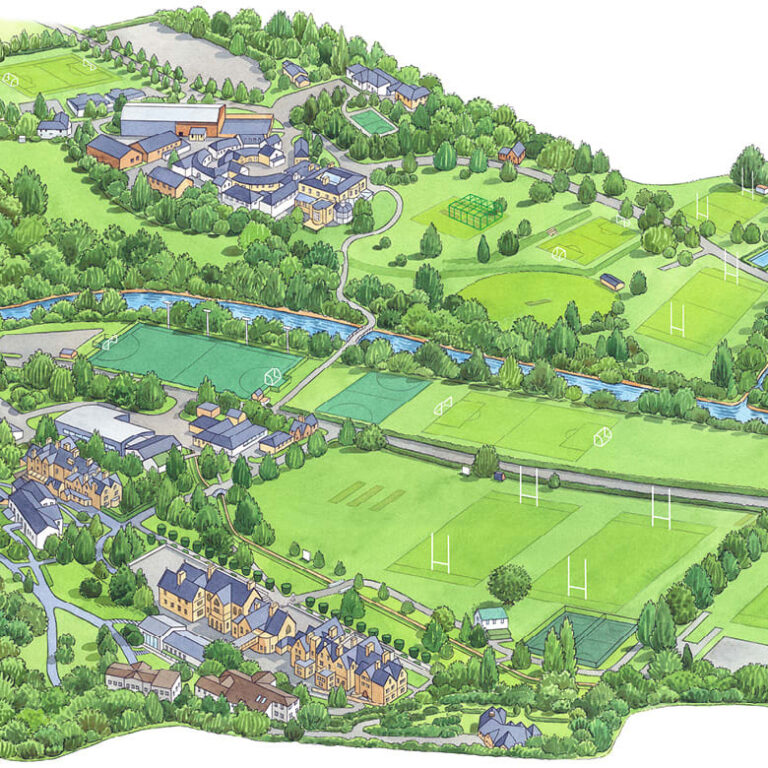
Set against the stunning backdrop of Mount Kelly’s grounds, our dedicated art facilities are truly exceptional, featuring a gallery, pottery studio, photographic suite, art library, and two spacious, purpose-built studios. The beautiful outdoor spaces also provide the perfect setting for ‘En Plein air’ painting, inspiring creativity in every corner.

Art at Mount Kelly is much more than technique, it’s a powerful tool for creative problem-solving and self-expression. Our pupils gain confidence as they learn to critically analyse their world and communicate their unique perspectives through their artwork.

Students master traditional skills like drawing, painting, printing, and sculpture, while also exploring imaginative and surreal approaches that encourage personal discovery. We celebrate mistakes as stepping stones to innovation, inviting pupils to experiment independently and respond to text, imagery, and experiences in fresh, original ways.

The GCSE Art and Design course is designed to expand both creative and practical skills, encouraging pupils to build rich, diverse portfolios that showcase their growing expertise. Our vibrant lessons delve into the many roles art, craft, and design play in society, sharpening pupils’ visual communication and expressive abilities.

In the Sixth Form, pupils enjoy a university-style studio space that fosters self-motivation and creative maturity. Through targeted study skills sessions, they deepen their art historical knowledge, develop critical thinking, and craft sophisticated, personal portfolios driven by independent projects.

Beyond the studio, learning flourishes with gallery visits, educational trips, and inspiring masterclasses led by visiting artists. Pupils are challenged to think critically and engage in thoughtful discussions and critiques of their own work and that of their peers. Their creativity shines regularly through exhibitions in our Westall Gallery and across local venues, celebrating their artistic journey.
Business Studies

Business Studies

GCSE Business Studies


Business is everywhere, from the headlines about energy suppliers and tech giants to the shifts in the high street and global markets. This exciting course gives you a real-world look at how businesses operate and make decisions every day.

You’ll explore key areas like marketing, entrepreneurship, people management, operations, finance, and the wider economic and social factors that influence business success. Topics include:

  • Marketing
  • Starting and running a business
  • Employee roles and teamwork
  • Production and operations
  • Financial management
  • Economic principles

Business Studies will get you fully involved in the fast-moving world of business. You’ll develop critical thinking skills, learning how to tackle real business challenges and make informed decisions based on evidence. The course also encourages you to see issues from different perspectives, understanding the impact on customers, employees, shareholders, and society.

You’ll dive into current business trends, global markets, and how technology is reshaping the economy, preparing you to think like a future business leader.

Computer Science

Computer Science

GCSE Computer Science


Technology shapes everything we do, and understanding how it works is a powerful skill. This course gives you an insider’s view of the digital world, revealing what happens behind the scenes in computer systems and diving into the exciting world of programming.

You’ll develop strong problem-solving skills, learn to think logically, and build the ability to break down complex challenges, all through hands-on coding with Python.

Key learning goals include:

  • Developing computational thinking – figuring out what can be computed and how
  • Mastering problem-solving techniques using computers
  • Understanding how computer systems are made up of interconnected parts – from hardware and software to data and networks
  • Building practical skills to solve real-world problems with programming

GCSE Computer Science prepares you for a tech-driven future, giving you the tools to innovate and create in an increasingly digital world.

Design Technology

Design Technology

GCSE Design Technology Product Design


The Product Design Department has an excellent track record at GCSE and A Level, and has won several awards from the Good Schools Guide. Product Design is an extremely popular subject and the department maintains a fierce academic rigour whilst allowing pupils the thrill of designing and creating their own products.

Year 9 pupils create an exciting range of products using traditional materials. Projects include copper braising, fused glass jewellery, pewter and resin coasters, mirror frames, chopping boards and ‘Greenwood’ spatulas. Projects build upon skills learned at the Prep but also provide a sound basis for those who have not studied Product Design before.

GCSE and A Level pupils study the AQA Product Design Specifications which allow them exciting opportunities of designing and making products using any material.

Year 10 pupils learn both Theory and Practical skills. Theory topics include all common materials like timber, metals and plastics, but also smart materials. History of design, industrial manufacturing methods and sustainability are also key topics at GCSE and A Level. In practical lessons, pupils complete a variety of tasks, building skills for Year 11.

Year 11 pupils complete the unit 2 controlled assessment, worth 60% of the GCSE. They have freedom to choose their projects and past students have created items of prototype furniture, fashion jewellery, sports equipment, garden furniture, water features, lighting and household accessories.

At A Level, pupils extend their knowledge and skills beyond GCSE, gaining a deeper understanding of materials and industrial manufacturing processes in readiness for the two, demanding Year 13 examinations and complete two innovative ‘Shop Quality’ prototypes.

Every year pupils have the opportunity to represent the school in the exciting Go4SET scheme, introducing them to the world of Science, Technology, Engineering and Mathematics careers. In recent years, Year 9 pupils have won the South West competition and competed in the national final at the NEC. Pupils also gain their CREST Bronze awards for project work and may also work towards their Industrial Cadet Award.

Drama

Drama

GCSE Drama


GCSE Drama equips pupils with a strong foundation in creativity, practical skills, and confident performance. Pupils actively engage with a wide range of exciting activities, exploring diverse situations and contexts that resonate with their own experiences.

Beyond the stage, pupils develop invaluable life skills such as effective communication, public speaking, teamwork, leadership, problem solving, time management, and the discipline to deliver polished performances under pressure.

In the practical components, pupils can choose to specialise in areas like performing, lighting, sound, set design, costume, or puppetry — discovering where their passion truly lies.

The course is divided into three components:

  • Building knowledge and understanding through the study of a set play
  • Analysing and evaluating the work of live theatre makers
  • Creating and performing original pieces, culminating in the performance of two extracts from a chosen play

Performances are group-based, with pupils contributing as actors or designers, fostering collaboration and creative expression in a supportive environment.

English

English

IGCSE English Language


Mastery of English is central to success across all subjects and essential for life beyond school. Proficiency in English opens doors to knowledge, communication, and opportunity, removing barriers to achievement.

The IGCSE English Language course enables pupils to:

  • Communicate clearly, accurately, and confidently in both speech and writing
  • Use a rich and varied vocabulary, alongside correct grammar, spelling, and punctuation
  • Develop a personal writing style while considering their audience

Pupils are encouraged to read widely — both for enjoyment and to deepen their understanding of how language works. The course also builds key analytical and communication skills, including inference, organising ideas, and presenting opinions effectively.


IGCSE English Literature


A love of reading broadens horizons and enriches life with knowledge, empathy, and critical thinking. Literature inspires pupils to explore diverse perspectives and develop transferable skills that will serve them for a lifetime.

The course offers a rich and varied programme, introducing pupils to modern prose and drama alongside a detailed study of a 19th-century novel. Pupils will also study one of Shakespeare’s plays and explore a cluster of poems on the theme of ‘power and conflict’.

As Jane Austen famously said in Pride and Prejudice:

“I declare after all there is no enjoyment like reading! How much sooner one tires of anything than a book!”

Through literature, pupils discover the joy of reading and the power of storytelling.

Geography

Geography

GCSE Geography


Geography is a dynamic, relevant, and adventurous subject that unlocks the secrets of our ever-changing planet. It’s at the heart of many of the world’s biggest challenges and it needs curious, passionate geographers to explore solutions for the future.

This academically rigorous subject blends social and physical sciences, sparking a lifelong fascination with how our world works. Pupils will delve into the complex relationship between people and environments, understanding how human activity shapes the planet and how the planet shapes human lives. The focus on sustainable management equips pupils with the knowledge and mindset to protect our world for generations to come.

Geography also develops a deep appreciation for the diversity and commonalities of places and communities across the globe.

The course is structured into three key components:

  • Changing Physical and Human Landscapes
  • Environmental and Development Issues
  • Applied Fieldwork Enquiry

Through engaging lessons and hands-on fieldwork, pupils gain valuable skills in analysis, critical thinking, and problem-solving—preparing them to make a real difference in the world.

HPQ

HPQ

Higher (Level 2) Project qualification (HPQ)


The Higher Project Qualification (HPQ) offers pupils in Years 9 and 10 a fantastic chance to dive into a subject they are passionate about—beyond the usual curriculum. It is a standalone Level 2 qualification designed to build vital skills in research, planning, communication, and self-management, providing a strong foundation for GCSEs and a stepping stone toward the Extended Project Qualification (EPQ).

The HPQ encourages pupils to become curious, independent learners who take ownership of their work. Whether exploring new ideas, testing creative approaches, or investigating a personal interest, pupils develop transferable skills that will benefit them throughout their academic journey and beyond.

What does the HPQ involve?

  • Choosing a topic that excites them and extends their learning
  • Defining a clear research question or project brief
  • Planning their approach to deliver a successful outcome
  • Conducting thorough research using a variety of methods
  • Creating a final product—which might be a detailed report, a design, a media project, a performance, an artefact, or a mix of these
  • Presenting their findings and reflecting on what they have learned

This qualification not only develops essential study skills but also nurtures creativity, critical thinking, and confidence. Pupils learn to manage a project from start to finish, communicate their ideas effectively, and evaluate their own progress—all invaluable skills for future success.

History

History

IGCSE History


History is more than just dates and facts, it’s an invitation to explore the stories of human society and understand the forces that shape our world today. At Mount Kelly, pupils are encouraged to ask the big questions: Why did events happen? What motivated people? How do the past and present connect?

Through a dynamic and diverse curriculum, pupils develop strong analytical skills and a deep knowledge of 20th-century history from social, economic, cultural, and political perspectives. They study international relations after World War I, uncovering the causes behind the collapse of peace by 1939, and investigate the complex origins of the Cold War. A focused depth study examines America’s transformation between 1919 and 1941, offering insight into a pivotal era.

Pupils learn to scrutinise historical documents and evidence critically, forming balanced, well-reasoned judgments, and presenting clear, compelling arguments. This rigorous approach builds confident, thoughtful learners who can see the bigger picture.

We believe history isn’t just about avoiding past mistakes, it’s about inspiring curiosity, broadening horizons, and shaping well-rounded individuals. Understanding where we come from helps our pupils navigate the challenges of today and tomorrow with insight and confidence.

Mathematics

Mathematics

GCSE Mathematics


Mathematics is a vibrant and popular subject at Mount Kelly, with many pupils continuing their studies into the Sixth Form. Our department believes that every pupil can succeed in Maths, that mistakes are stepping stones to understanding, and that learning maths can be both fun and inspiring.

As Marcus du Sautoy says, “Mathematics has beauty and romance. It’s not a boring place to be, the mathematical world. It’s an extraordinary place; it’s worth spending time there.”

Mathematics is truly a universal language, essential not only in commerce, engineering, and science but also in helping us recognise patterns and make sense of the world around us. In an increasingly technical society, strong mathematical skills open doors to countless opportunities and careers.

Our GCSE Mathematics course covers six core areas:

  • Numbers and the number system
  • Equations, formulae and identities
  • Sequences, functions and graphs
  • Geometry and trigonometry
  • Vectors and transformation geometry
  • Statistics and probability

Beyond content, we nurture analytical thinking, problem solving, logical reasoning, and adaptability. The skills highly prized by employers across all industries.

Modern Foreign Languages

Modern Foreign Languages

GCSE French & GCSE Spanish


Learning a language at GCSE opens up exciting doors — not just for careers, but for life. Pupils gain practical communication skills that will help them connect at home and abroad, while developing a broader understanding of the world and their place in it. Alongside language, the course sharpens key skills like communication, ICT proficiency, problem-solving, and teamwork, all essential for future success.

The GCSE curriculum explores three engaging themes that run through all assessments:

Theme 1: Identity and Culture
Who we are: family, friends, technology, hobbies, plus customs and festivals from French or Spanish-speaking countries, bringing the language to life through culture.

Theme 2: Local, National, International and Global Issues
Exploring home and community, social and global challenges, and travel and tourism, giving pupils real-world context to their learning.

Theme 3: Current and Future Study and Employment
From life at school to future education, career choices and ambitions, pupils learn to discuss their own plans and experiences confidently.

Our language courses inspire curiosity, cultural appreciation, and practical skills, setting pupils up to thrive in an increasingly connected world.

Music

Music

GCSE Music


Music at Mount Kelly is vibrant, varied, and accessible to all passionate pupils. To thrive in this course, pupils should be proficient on an instrument or voice to around Grade IV level by the end of Year 11.

Performing together is at the heart of the course, whether as soloists or ensemble members, across any style or instrument, including voice. Pupils learn how to prepare, rehearse, and record performances, with options to focus exclusively on technology-based music production for those interested in digital composition and sound design.

By studying a diverse range of set works, pupils develop essential skills in composing, performing, and critical listening. They explore practical improvisation alongside modern software tools such as Sibelius for traditional notation and Logic Pro for contemporary, technology-driven styles.

The course nurtures creativity, technical ability, and musical confidence, preparing pupils for a lifelong love of music.

Personalised Learning

Personalised Learning

“In the middle of every difficulty lies opportunity.” — Albert Einstein

At Mount Kelly, Personalised Learning means embracing the unique needs and strengths of every pupil. Whether supporting Special Educational Needs and Disabilities (including Potential High Achievers), Medical and Mental Health needs, English as an Additional Language, or the demands faced by our performance swimmers and athletes, we tailor our approach to help each child thrive.

Our foundation is Quality First Teaching, enhanced by a flexible, graduated response through Wave 1, 2, and 3 interventions. We make reasonable adjustments, offering small group support and targeted study skills sessions. While one-to-one support is available on an ad-hoc basis, it is not part of the regular timetable. All Year 9 pupils undergo screening with Lucid Exact to assess key skills like reading comprehension, writing speed, spelling, and typing.

Each pupil has access to an academic mentor to develop study and research skills, and many classes benefit from the expertise of Teaching Assistants. Our College SENCo is a British Dyslexia Association approved teacher and Access Arrangements Assessor, while our Prep SENCo specialises in Autism Spectrum Condition (ASC) and ADHD.

Personalised Learning Profiles (PLPs) provide teachers with clear strategies tailored to each pupil’s needs, ensuring classroom support is effective and responsive. These profiles are regularly reviewed in collaboration with pupils, parents, and staff.

Provision for Pupils with Education, Health and Care Plans (EHCPs)

We work closely with families, pupils, and Local Authorities to ensure the school can meet the requirements outlined in each EHCP. Pupils with an EHCP benefit from:

  • A detailed Personalised Learning Profile outlining their needs and tailored support strategies
  • Half-termly reviews of academic progress and personal development
  • Regular, open communication between parents, pupils, tutors, and teachers

At Mount Kelly, every pupil’s journey is supported with care, expertise, and a commitment to unlocking potential.

Philosophy, Religion & Ethics

Philosophy, Religion & Ethics

In Year 9, pupils explore Philosophy, Religion and Ethics (PRE) through the lens of tolerance and diverse worldviews. This course encourages them to engage thoughtfully with philosophical, theological, and ethical questions, developing a critical and open-minded approach to religious and moral issues. PRE appeals to all pupils, regardless of their personal faith, by fostering curiosity and respectful dialogue.

The key aim of PRE is to help pupils learn about a variety of religions while beginning to understand how beliefs shape people’s perspectives and actions.

GCSE Religious Studies


At GCSE level, pupils dive deeper into questions of belief, value, meaning, purpose, and truth, considering how these influence human life. This course offers a chance to reflect on personal values and beliefs while preparing pupils for life in a diverse, pluralistic society and global community.

The curriculum is contemporary and engaging, allowing pupils to study two religions in depth, alongside philosophy and ethics in the modern world. Topics include relationships and families, peace and conflict, belief in God, and non-religious worldviews.

GCSE Religious Studies equips pupils with vital skills for today’s world: critical thinking, reasoned debate, and balanced analysis. Pupils develop the confidence to construct well-informed arguments on complex religious and ethical issues and become reflective learners who appreciate their own views and thoughtfully consider those of others.

Physical Education

Physical Education

GCSE Physical Education


For pupils who love being active and are curious about how the human body works, GCSE Physical Education offers a fascinating blend of theory and practice. The course explores the key principles behind physical performance from physiological, psychological, biomechanical, sociological, and historical perspectives.

Pupils develop their knowledge and understanding through a variety of practical activities alongside learning about the science and skills that contribute to high-level performance. The first exam paper focuses on the human body in motion, covering anatomy topics such as the musculoskeletal, respiratory, and cardiovascular systems. Pupils also study physical training, skill acquisition, and the use of data in sport.

The second paper examines socio-cultural influences on sport, sports psychology, and health and well-being in physical activity. Pupils explore themes including the National Curriculum, international sporting events, and social roles within sport.

Active participation in at least three sports is essential, with pupils encouraged to develop both their practical abilities and their understanding of rules and strategies.

Pre A Level Course

Pre A Level Course

Our Pre A Level Programme is designed for international pupils who are new to the British education system and wish to build confidence before progressing to Sixth Form study.

Rather than focusing on formal GCSE examinations, this programme provides a tailored academic foundation, combining key subject knowledge with the study skills, language development and cultural understanding needed to thrive at A Level and beyond.

Pupils follow a bespoke timetable, typically including subjects that they are likely to study in the Sixth Form, alongside a selection of additional subjects suited to their interests and future ambitions. This flexible approach allows each pupil’s programme to be shaped around their strengths, aspirations and intended future pathway.

A central feature of the course is English language development. Dedicated EAL lessons support pupils in building fluency and academic confidence, with the opportunity to work towards a recognised Cambridge English qualification.

Beyond the classroom, pupils are fully immersed in School life, taking part in the same co-curricular programme as their peers. This ensures they develop socially, culturally and personally, as well as academically.

This programme is ideal for pupils who would benefit from an additional year to adapt to the British curriculum, explore subject choices and prepare thoroughly for the demands of the Sixth Form. Many pupils who take this pathway go on to achieve excellent A Level results and secure places at leading universities.

Entry Requirements

  • Written assessments in Mathematics and English
  • Interview with an Admissions Manager (in person or online)
  • Most recent school report (translated into English)
  • A satisfactory reference from the pupil’s current school
PSHE

PSHE

PSHE is a vital part of our pupils’ journey, delivered weekly in Years 10 and 11 and fortnightly in Year 9 by passionate, experienced teachers. Our dynamic curriculum is carefully crafted and regularly refreshed to stay relevant, preparing pupils to confidently navigate life’s challenges both now and in the future.

Built as a spiral programme, PSHE grows with our pupils year on year, deepening their understanding and skills while introducing new, thought-provoking topics that become more complex through to Year 11. This approach nurtures resilience, self-esteem, and confidence, empowering pupils to manage risks, make informed choices, and understand the influences shaping their decisions. It also encourages them to embrace their own identities and values, celebrate diversity, adapt to change, manage emotions, and communicate positively in all areas of life.

The curriculum aligns with the PSHE Association Programme of Study and Government guidelines for Relationships, Sex and Health Education, alongside British Values. It’s organised around three core strands: Health & Wellbeing; Relationships and Sex Education; and Living in the Wider World, which includes Online Safety, Careers Guidance, and Financial Education.

To keep learning fresh and meaningful, topics are often linked to national and international awareness events such as Anti-Bullying Week, School Diversity Week, and Mental Health Awareness Week. Pupils also benefit from inspiring sessions with guest speakers and external organisations, enriching their understanding beyond the classroom.

Science

Science

GCSE Combined Science Trilogy
GCSE Separate Sciences (Biology, Chemistry and Physics)


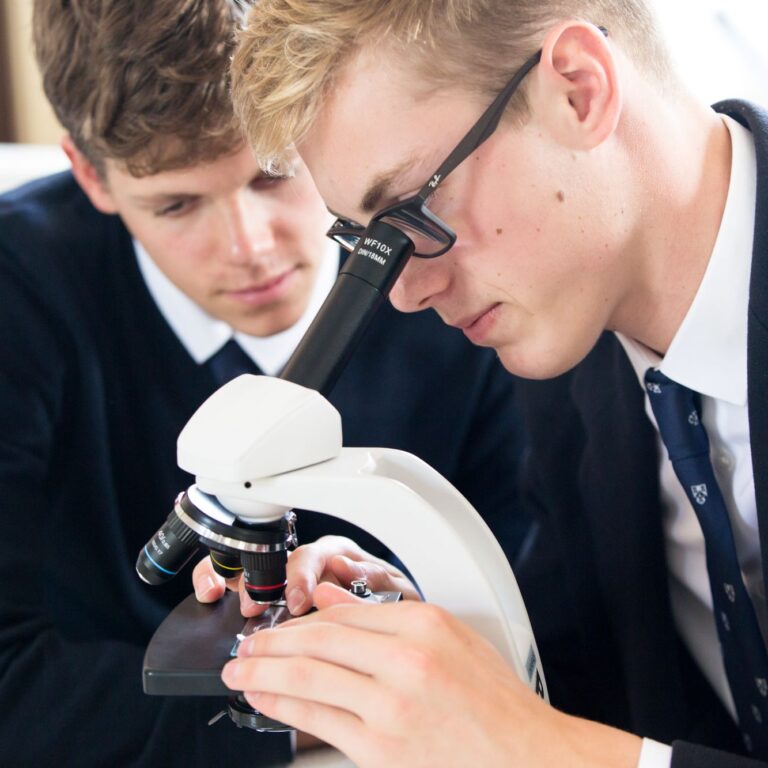
The Mount Kelly Science Faculty is driven by one clear philosophy: Science for all. We aim to ignite natural curiosity and enthusiasm for science in every pupil, whatever their ability or future plans. In today’s world, a solid grasp of scientific concepts and methods is essential for everyone.

Specialist teachers lead lessons in Biology, Chemistry, and Physics, with pupils beginning their GCSE journey in Year 9. This early start allows time to build a strong foundation of core ideas and sharpen practical skills needed for hands-on experiments.

Combined Science Trilogy
This pathway blends the three sciences into two GCSEs, offering a broad and balanced overview. It’s available at both foundation and higher tiers, with exams taken at the end of Year 11.

Separate Sciences
For those who want to dive deeper, Separate Sciences provide individual GCSEs in Biology, Chemistry, and Physics. This route offers more detailed study and longer exams at the end of Year 11, perfect for pupils passionate about science or aiming for science-based careers.

English as an Additional Language

English as an Additional Language

Cambridge First Certificate (FCE) | Cambridge Advanced (CAE) | Cambridge Proficiency (CPE) | IELTS


The EAL Department offers much more than language support, it’s a welcoming hub where overseas pupils find their feet and thrive. We understand that moving to a new country can bring challenges like culture shock, homesickness, and initial learning hurdles. That’s why we provide tailored one-to-one or small group tuition, designed to support each pupil’s unique needs and promote their spiritual, moral, social, and cultural growth.

Our comprehensive programme prepares pupils for GCSEs, A-levels, and internationally recognised English exams such as Cambridge English: First (FCE), Advanced (CAE), Proficiency (CPE), and IELTS.

Year 9
Pupils study EAL as a core subject, usually instead of a modern language (French or Spanish), depending on their English level and learning needs. Lesson frequency varies from one to four per week, determined by an initial English skills assessment on entry.

Years 10 and 11
EAL becomes one of the four option subjects, typically taught across three lessons weekly. The curriculum includes topic-based projects that complement academic studies while broadening cultural and social understanding.

Examinations
Year 9 sit internal EAL exams alongside mainstream subjects, while Years 10 and 11 take GCSE English alongside Cambridge ESOL exams. These Cambridge qualifications are internationally respected, opening doors worldwide and showcasing pupils’ English proficiency with pride.

EAL lessons for International Boarders are included in the fees.