

However, many schools are unable to take students out of the classroom into the natural world to experience three-dimensional science learning; where students are able to learn by immersing themselves in the environment.
This hands-on approach to increase observation learning, develop curiosity and cultivate critical thinking is the cornerstone of the Royal Society funded Partnership Grant project “How biodiverse is our school site?” led by physics teacher Laura Russo and Marine Conservation Lecturer Dr Nicola Quick from the University of Plymouth.
Children learn by doing, and the most powerful experiences are when they have context they can relate to. Dr Quick, who has spent the past 20 years researching whale behaviour, has always been interested in engaging young students in science learning and finding meaningful ways to achieve this. One of the key questions is: can the students see themselves doing science? Often the answer is “no” because the concepts are too abstract and they have no relatable experiences. Although the students have an interest and desire to learn about the environments around them, many are ill-equipped to solve problems or develop their own ideas, and this is often seen at a higher level with undergraduates struggling with observational and practical skills.

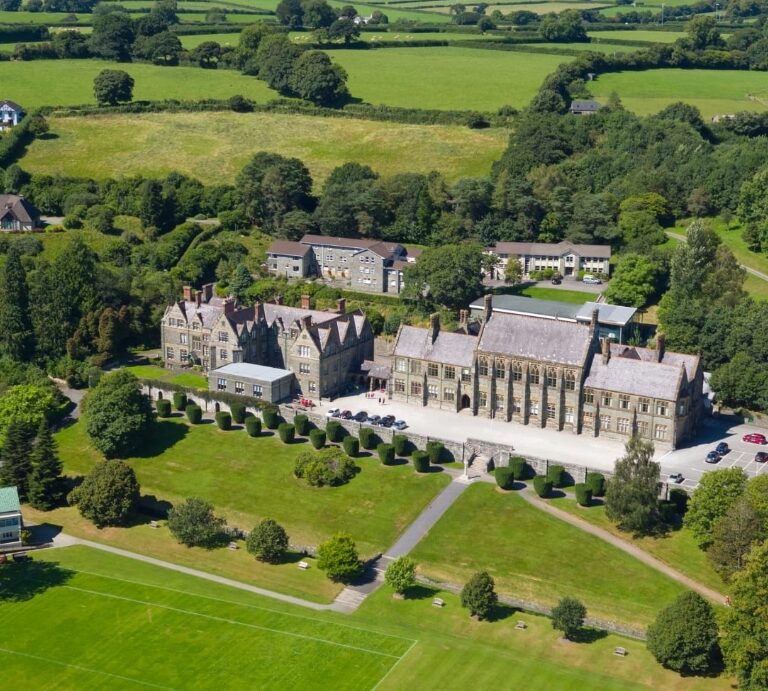
Ms Russo, an established physics teacher of 18 years and a lover of the outdoors, was keen to utilise the stunning school grounds where she teaches. The school is ideally situated on the edge of the beautiful Dartmoor National Park and, enviably, has the river Tavy running through it and temperate rainforest lining its banks. Ms Russo was motivated to engage student interest, both outside the classroom and beyond the limits of the science GCSE syllabuses, which are heavy in content but light in application, and with little reference to climate science.
With strong support from Mount Kelly School, the University of Plymouth and The Royal Society Partnership Grant scheme, Ms Russo and Dr Quick had a clear vision to connect students to their environment, develop key scientific skills and underpin the key stage goals of the National Curriculum.
The programme, which spans Years 3 to 8 gives pupils the chance to explore their environment through hands on scientific activities—whether that’s kick sampling water invertebrates in the River Tavy or measuring plant abundance around the school grounds using quadrats. Each group returns to their chosen method several times throughout the year. This repetition helps them build practical scientific skills, reflect on their techniques, and begin to notice seasonal or environmental changes in the data they collect. More importantly, it encourages children to slow down, observe, and develop a genuine connection with the world around them.
All the information gathered contributes to a growing student led biodiversity database. Over time, this shared bank of data becomes a powerful resource—allowing pupils to track changes, identify patterns, and link classroom learning with direct experience outdoors. This evolving dataset also lays the foundation for long term scientific thinking within the school. By Year 10, students design their own biodiversity research projects—choosing a topic that interests them, forming a hypothesis, and using appropriate scientific methods to gather robust data. Existing projects include studying ants, eDNA for otters and crayfish, bird abundance, and moss and lichen diversity.

The impact on the school is already measurable with an increased awareness of the importance of sampling biodiversity and the engagement of students with science outside the classroom. The long-term goals of the project are to embed an understanding of diverse sampling methods, observation skills, and the value of hands-on fieldwork into the curriculum, equipping students with the necessary observational, practical and analytical skills for GCSE Biology and A-level Environmental Science. In addition, Mount Kelly plan to be one of the first schools to introduce the new GCSE Natural History. The transferable skills developed during the biodiversity project including careful observational study, generating systematic records over time, and analysing real changes in terms of biodiversity, will prepare the students well. It is also the hope that the biodiversity project will serve to broaden students’ understanding of how these skills might fit into their future careers.
Looking ahead, there are already plans this summer to roll-out the programme to local primary schools in the surrounding area. The student ambassadors from Year 10 will be showcasing different sampling techniques across the projects that they themselves have spear-headed. The overarching goal of this outreach work is to foster institutional change in the way that students engage and interact with the natural world through observation and scientific method.
Dr Quick and Ms Russo are also exploring options for further partnership to develop aspects of the project. This includes collecting data for a biodiversity net gain assessment and purchasing equipment such as camera traps and hand-held devices to help students develop a synergy between the advance of technology in their everyday lives and the need to conserve and understand biodiversity in the natural world.
The initial funding from the Royal Society Partnership Grant has been instrumental in building the foundation of the project between Mount Kelly School and the University of Plymouth as the STEM partner. Looking forward, there are many exciting opportunities and developments already planned to help develop tomorrows science leaders.
Article Written for and Published by the Royal Society. Authors: Dr Nicola Quick, Lecturer in Marine Conservation, and Ms Laura Russo, Physics Teacher